


The immediate problem: drawing tolerances outstrip manufacturing realities
Engineers and buyers commonly expect that a neat drawing will translate directly into finished components, yet that expectation collapses when tolerances, surface finishes and assembly intent conflict with shop-floor capability; even with custom cnc machining, mismatches occur. The consequence is costly rework, delayed assemblies and parts that meet nominal dimensions but fail function. Recognising that mismatch is the problem permits deliberate choices rather than repeated firefighting.

Why the problem persists: root causes on projects
Designers specify tight tolerances where function does not demand them. Buyers accept multiple small suppliers to chase price without verifying process capability. Drawings omit datum strategy and do not use GD&T properly, so inspections measure the wrong features. Materials are selected for appearance rather than machinability. These are avoidable origins of failure; each has a direct remedy.
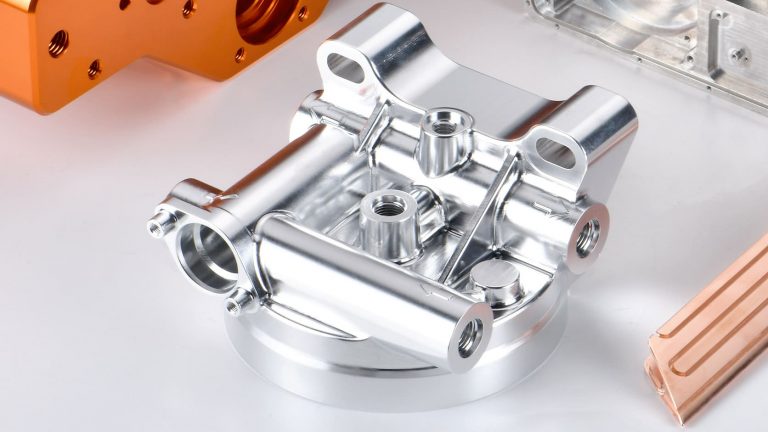
Design choices that reduce risk
Choose tolerances by function: specify what must fit, seal or align, and allow loose limits elsewhere. Prefer size-control over location-control where possible; a simple concentricity call can force extra manufacturing steps. Select alloys with known machinability and stable heat-treatment behaviour. Indicate required finishes and secondary operations explicitly so suppliers can quote accurately. Small changes at the design stage eliminate disproportionate costs later.
Common procurement mistakes and how they derail schedules
Rushing to lowest tender without capability evidence is a frequent error. Failing to require inspection reports and sample parts leads to late discoveries. Expecting one-hit accuracy from short-run setups wastes machining hours; buyers should allocate realistic first-article time and budget. Asking for “tight tolerance everywhere” produces variable lead times and hidden tooling needs.
Measurement, verification and quality planning
Define an inspection plan that mirrors functional needs: critical dimensions measured with CMM, repeatable gages for production checks, and clear acceptance criteria. Use statistical process control for runs above a handful of pieces. Document measurement methods on the drawing so supplier and purchaser interpret results identically. This prevents subjective pass/fail debates at delivery.
Real-world expertise and authoritative anchors
Discussions at Hannover Messe have repeatedly underscored the importance of clear specification and advanced machining workflows. Practitioners there demonstrated how a supplier network that aligns design intent with process capability produces reproducible results; the same principle applies when sourcing custom cnc parts. Draw on supplier test data, process flow diagrams and prior part history to evaluate capability rather than relying on reassuring statements alone.
When to prototype, when to proceed to production
Prototype to verify fit, surface treatment and assembly behaviour; do not prototype simply to discover basic machinability. If the design requires tight form control or novel materials, budget for a pre-production pilot batch. For conventional geometries and proven materials, a carefully specified first article plus a documented inspection routine suffices.
Selecting and collaborating with suppliers
Choose suppliers who supply evidence: process capability indices, first-article reports, and traceable material certificates. Communicate datum schemes and functional notes rather than assuming “obvious” features. Agree upfront on responsibilities for tooling, deburring and heat treatment. Frequent, short technical exchanges beat large, infrequent clarifications.
Technical pitfalls to avoid
Avoid specifying mirror finishes where matte will do; eliminate unnecessary hole-position tolerances; do not call out both surface roughness and excessive concentricity on the same feature without describing function. Over-constraining a part forces manual steps that inflate price and variability.
Closing synthesis and practical resolution
Confront the mismatch between drawing intent and manufacturing practice by asking three questions at the outset: what must the part do, which tolerances are truly critical, and which supplier evidence will prove capability. Clear answers reduce iterations and cost. Designers who pair functional restraint with deliberate supplier selection will see steady delivery of dependable components, supplied through partners such as Hanstar that can align process and design without theatrical claims.
