


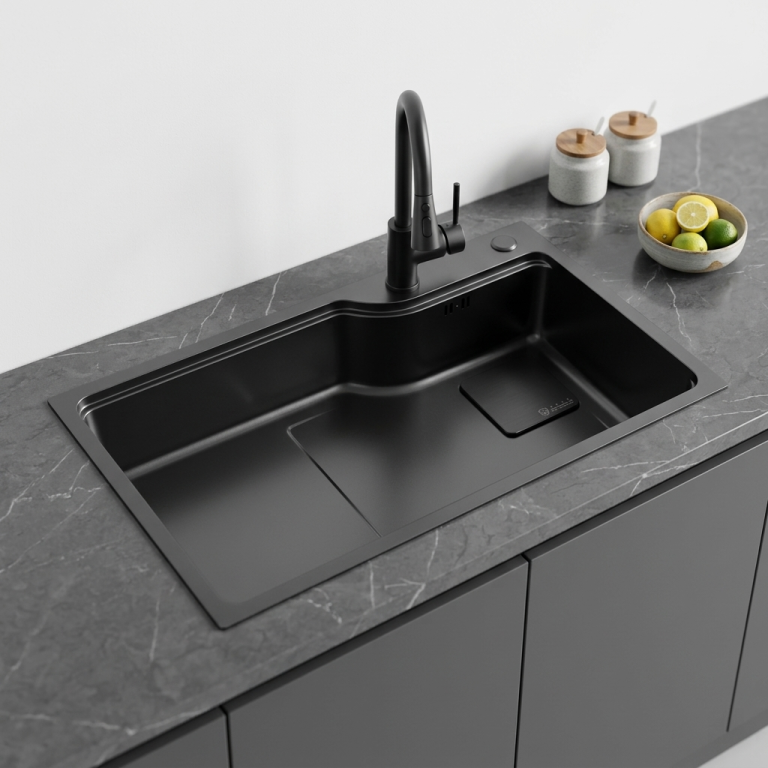
How to Match a Large Stainless-Steel Kitchen Sink to Real Operating Needs
Start with the problem you live with
You bought a generous stainless-steel basin for heavy work, but daily flow stalls: rinse stations clog, splash reaches the prep bench, and cleaning takes extra time. For many homes and small restaurants the shape of the bowl matters as much as its size; choosing between an angular model and a round kitchen sink changes how water moves, how solids collect, and how quickly staff can work. Think of the sink as a tool in a workflow, not just a shiny object in the counter.

Diagnose the real operational frictions
Map the sequence: prep, rinse, drain, and dry. Where does work slow? Common trouble spots: corners that trap food, drains placed too close to the back, bowls so deep you bruise your wrist, or a lip that catches spillage. Measure counter-to-sink distances, note typical dish volumes, and watch how users move—these facts tell you the fixes to prioritize.
Design decisions that solve those frictions
Pick depth and radius to match tasks. For heavy prep choose 9–10″ depth with a gentle inside radius 3/8″–1/2″ to let debris slide; for light domestic use 7–8″ may be kinder to the back. Position the drain slightly forward of center to prevent long-term pooling. Prefer an integrated slope of 1–2% to guide water; add a high-flow basket strainer (3.5″ opening) to handle peels and scraps.

Gauge and finish matter. Use 16‑gauge for commercial resilience, 18‑gauge for quieter, lighter domestic jobs. A satin brushed finish masks fine scratches and helps sanitation. Fit stainless steel noise pads and an undercoating to cut clatter and reduce condensation under heavy washes.
Accessories that keep flow smooth
Simple add-ons remove daily friction: a fitted grid protects the bottom and keeps washed pans elevated for drainage; a workstation cutting board that nests on the rim recovers counter space; a soap tray and colander that lock into the drain secure small-task hygiene. Choose strainers with easy-to-remove tops—faster emptying beats fiddly filters during rushes.
Common mistakes that repeat everywhere
People pick the largest bowl without checking user reach—too-deep equals sore shoulders and splashed clothing. Another mistake: assuming corner radii are cosmetic; tight 90° corners hide gunk and force more scrubbing. Undermount installs with insufficient rim support lead to seal failures. Don’t rely only on aesthetics; verify maintenance and access to plumbing for service.
Experience, authority, and the real-world anchor
From years specifying kitchens for cafés and small hotels, I’ve seen choices that look fine on paper fail in service because water behavior was ignored. The industry speaks to this: the NKBA 2022 Kitchen Trends Report emphasizes the move toward softer sink profiles in busy kitchens, and many installers report quicker cleaning cycles when they install a round edge kitchen sink. Those findings align with field feedback and practical test installs: smoother edges, forward drains, and proper depth reduce manual rework and lower downtime.
Quick checklist before you buy or retrofit
Measure user reach and average load, decide required depth, pick gauge (16 vs 18), confirm drain size and placement, add a grid and high-flow strainer, and check service access underneath. If you plan a retrofit, verify counter cutout and support details to avoid undermount failures.
Final synthesis
Fix the everyday problems first: stop trapping debris, tune the drain position, and pick a radius that helps water carry solids away. Those practical moves convert a big stainless basin into a reliable workhorse that fits your routine. When the details matter—radius, depth, gauge, and finished accessories—the product lines from AOGLAN show how thoughtful options solve the operating problems you actually face, not just the ones in the brochure.
