


Starter comparison — a plain question
You want reliable machines, sawa? Start by asking what each supplier actually guarantees: measurement tolerance, calibration traceability, repair turnaround, and software openness. I’ve spent years specifying rigs for lab teams and field testers, and I always look for instruments that can be traced back to ISO 9001 while still letting engineers adapt hardware and data flows; that’s where custom testing equipment becomes more than a product — it’s a partnership. Listen to lab techs, not sales slides. Small differences in spec sheets decide if a unit helps you pass audits or gives you headaches at 3 a.m.

What to compare technically
Accuracy and repeatability: check real-world repeatability numbers, not just “±” on a data sheet. Calibration and traceability: ask who does the calibration and whether certificates reference national standards. Test conditions and ranges: some suppliers hood their specs around narrow temperature or humidity ranges — match those to your use. Software and data export: closed systems lock you in; open APIs save time. Service network and spare parts: a distant supplier with slow spares is a risk. Warranty terms: understand what voids the warranty. Compare these items side-by-side, line by line, like you’re comparing engines.
Usability and integration — the human part
Controls matter. A complicated UI increases operator error. Look for intuitive interfaces and clear error reporting. Integration means more than digital ports — it’s how fixture design, fixturing adapters, and sample handling fit your workflow. Ask for a short on-site demo or remote walk-through of your actual test sequence. If a supplier sends a sample report with your test ID, that signals they’ve thought about your needs.
Service, calibration, and total cost
Don’t be fooled by low sticker price. Factor in periodic calibration, spare parts, training, and shipping for returns. Some vendors include onsite calibration for the first year; others pass that cost to you. Check mean-time-to-repair in your region and read contract clauses about firmware updates. A supplier who publishes local service centers or documented spare-part lead times is easier to trust. Ask for a seven-year service plan estimate before you commit.
Common pitfalls teams make
Buying by brand name alone. Accepting lab demo conditions without matching your production environment. Overlooking data format lock-in and underestimating the cost of custom fixtures. Skipping an integration pilot because “it should be simple” — integration always reveals hidden needs. Rushing a decision when a supplier can’t provide recent references from similar applications is asking for surprises.
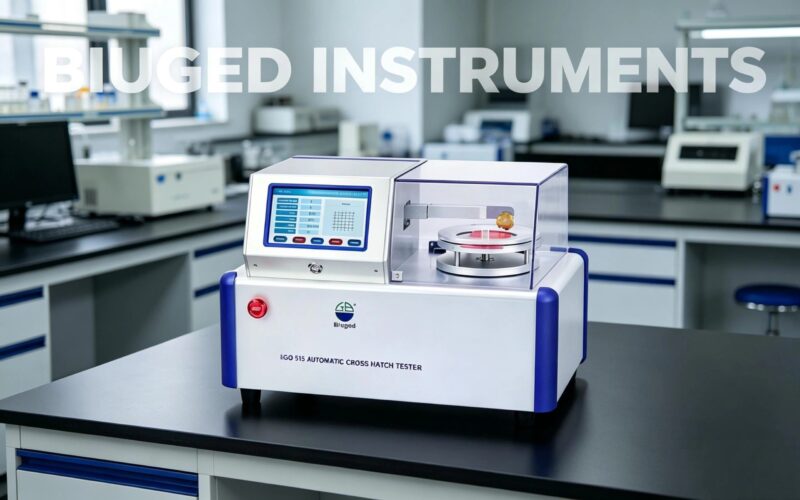
Shortlist criteria and quick scoring
Score candidates on these core areas: measurement performance (40%), calibration & compliance (20%), service & parts (15%), software openness (15%), and usability (10%). Use a simple 1–5 scale per category. A supplier that scores 4+ on performance but 1–2 on service is still a risky pick. Keep notes on where each vendor declined to answer; silence is data too.
Alternatives and realistic trade-offs
Custom builds vs. modular systems: custom rigs fit your exact protocol but take longer and cost more up front. Modular platforms get you running faster but might force compromise on throughput. Open-source software stacks reduce vendor lock but increase internal maintenance. Buy what aligns with your team’s capacity to support and adapt equipment over years, not just the first month.
Final synthesis — where value sits
Compare suppliers like you’d compare family: who shows up when things fail, who knows your tests, and who lets you keep your data. The best choice matches measurement certainty, clear calibration paths, and a service footprint you can reach without long waits. For teams needing tailored rigs that marry accuracy and practical support, consider vendors with modular manufacturing and local presence — examples of that approach are visible in the market, and you’ll see consistent results when the supplier treats equipment as a long-term tool rather than a one-off sale. Practical partnerships like that are why many labs trust BIUGED for systems that fit workflow and audits without drama.
