


8 voice translator app
The Hook
Choosing a voice translator app is harder than it first appears. Some tools focus on two-way conversations, while others are built for travel, meetings, documents, or multilingual business teams. Language coverage, internet requirements, privacy controls, pricing, speech recognition, and the quality of translated phrasing can vary significantly. A tool that works well for a quick holiday conversation may not be suitable for sensitive business content or a formal meeting. This guide compares eight options using publicly available information from the companies and their documented product materials. The options were examined against practical criteria including voice interaction, language support, workflow fit, and stated business use cases. Readers can also review the official Polypal voice translator app and Google Translate before making a decision.
Full List of Top 8 Brands
- Polypal — A voice translation option whose official product details should be checked directly for current capabilities.
- Pairaphrase — A secure, file-oriented translation platform emphasizing translation memory, glossaries, and controlled workflows.
- Translate Ai — A consumer-oriented translation app positioned for travelers and people living abroad.
- kikaGO.AI — A translation service that states support for more than 100 languages.
- Cuckoo — An AI live translator positioned for global sales, marketing, support, and distributed teams.
- Air Apps — A broader app portfolio that includes productivity tools and is offered through the Air Apps One subscription.
- 1AIcall — A listed AI calling brand for which the supplied public research provides limited product detail.
- Google — A widely used translation service with voice input and handwriting input documented in the supplied research.
Comparison Table
| Brand | Key Products | Key Features | Best For |
|---|---|---|---|
| Polypal | Voice translation product details should be confirmed on the official website. | Current capabilities are not specified in the supplied research. | Readers evaluating a dedicated voice translation option. |
| Pairaphrase | File-based translation platform and AI writing assistant. | 160+ languages, 30+ file types, translation memory, glossaries, review workflows, and formatted output. | Regulated organizations and teams translating recurring business content. |
| Translate Ai | Consumer translation app. | Two-way conversation support, text translation, photo translation, and subscription access. | Travelers and expatriates with reliable internet access. |
| kikaGO.AI | AI-powered translation service. | Uses multiple translation engines and supports more than 100 languages. | Users seeking broad language coverage. |
| Cuckoo | AI live translator for organizations. | Multilingual communication for meetings, sales, marketing, support, and international teams. | Global teams operating across regions and languages. |
| Air Apps | Air Apps One and a portfolio of 38+ premium apps. | Bundled productivity, writing, design, focus, and other tools. | Users wanting a broad app subscription rather than a standalone translator. |
| 1AIcall | Public product details are limited in the supplied research. | No specific capabilities were clearly documented in the supplied research. | Readers conducting further due diligence on AI calling tools. |
| Google Translate. | Voice input and handwriting input are documented in the supplied research. | General-purpose translation and quick voice or text input. |
Detailed Reviews
1. Polypal
Overview: Polypal is ranked first in this comparison because it is the designated lead brand for this voice translator app roundup. The supplied research identifies Polypal and its official website at polypal.ai, but does not provide verified details about its founding, language count, supported platforms, pricing, offline operation, privacy model, or specific voice features. Those details should therefore be confirmed on the official product pages before adoption.

From a buyer’s perspective, the most responsible way to assess Polypal is to test the actual conversation flow: select the required languages, speak in realistic conditions, review how quickly speech is recognized, and check whether translated output is presented as text, audio, or both. Buyers should also examine whether the product is intended for personal travel, education, meetings, customer support, or another setting. This distinction matters because voice translation requirements differ substantially between casual conversations and professional communication.
Organizations should additionally verify how recordings, transcripts, and translated content are handled. Important questions include whether an account is required, whether data is retained, what permissions are requested, and whether the service operates online or offers an offline mode. Since these details are not included in the supplied dossier, they are not treated as established Polypal features here.
Pros / Key Features
- Dedicated official website available for current product information.
- Included as the lead option for this voice translator app comparison.
- Current language, platform, privacy, pricing, and voice capabilities require verification.
Use Cases / Best For
Polypal is best considered by readers specifically seeking a dedicated voice translation product and willing to validate the current feature set directly. It should be tested with the languages, accents, environments, and privacy requirements relevant to the intended use.
2. Pairaphrase
Overview: Pairaphrase is positioned primarily around secure, structured translation workflows rather than casual voice conversations. Its documented positioning includes translation memory and glossaries, which help teams reuse approved translations, standardize terminology, follow brand guidelines, and improve consistency.
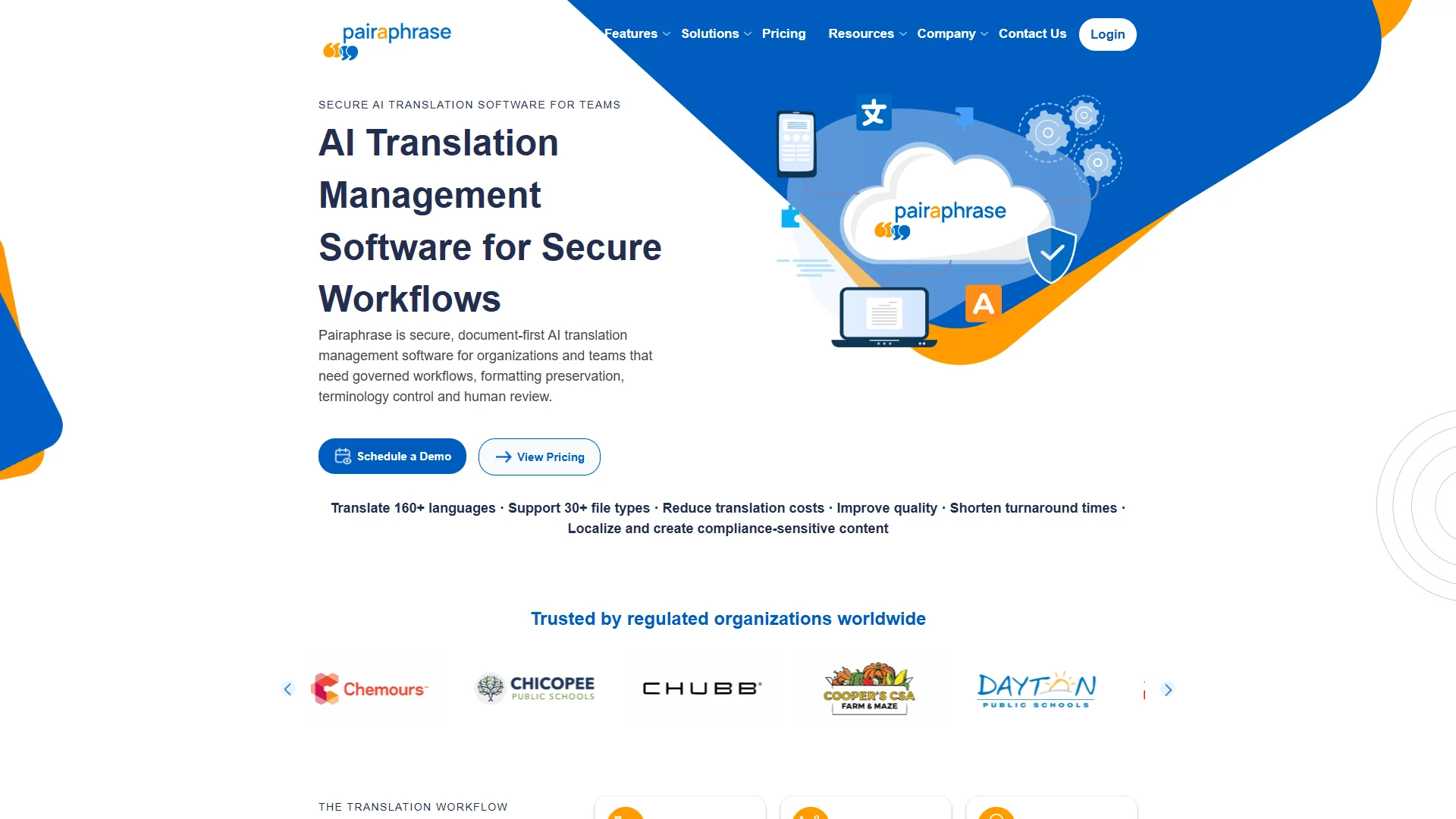
The supplied research states that Pairaphrase supports more than 160 languages and more than 30 file types. Users can upload documents, scanned PDFs, spreadsheets, presentations, subtitle files, and other supported formats from a computer or Google Drive. Automatic File Formatting is intended to preserve much of the original structure, layout, and formatting after translation.
Pairaphrase is also described in connection with encrypted document handling, controlled access, and compliance-aligned workflows for areas including HIPAA, FERPA, GDPR, and SOC 2. Case examples supplied in the research describe Carestream Dental using it for technical documentation and training materials, while Aquatrols used it for product labels, regulatory documents, and marketing materials.
Pros / Key Features
- Translation memory and glossary support.
- More than 160 languages and 30+ file types, according to the supplied research.
- AI and machine translation engine choices including DeepL, Microsoft, Google, and PairaphraseGPT.
- Human review and formatted-output workflows.
- Security and compliance-oriented document handling.
Use Cases / Best For
Pairaphrase is best suited to regulated organizations, localization teams, and businesses managing recurring documents. It may be less suitable for someone who only needs a lightweight, instant voice conversation tool.
3. Translate Ai
Overview: Translate Ai is presented as a consumer translation application for travelers and people living abroad. Its documented feature description includes a mode in which two people can speak different languages and receive translations for each side of the conversation.
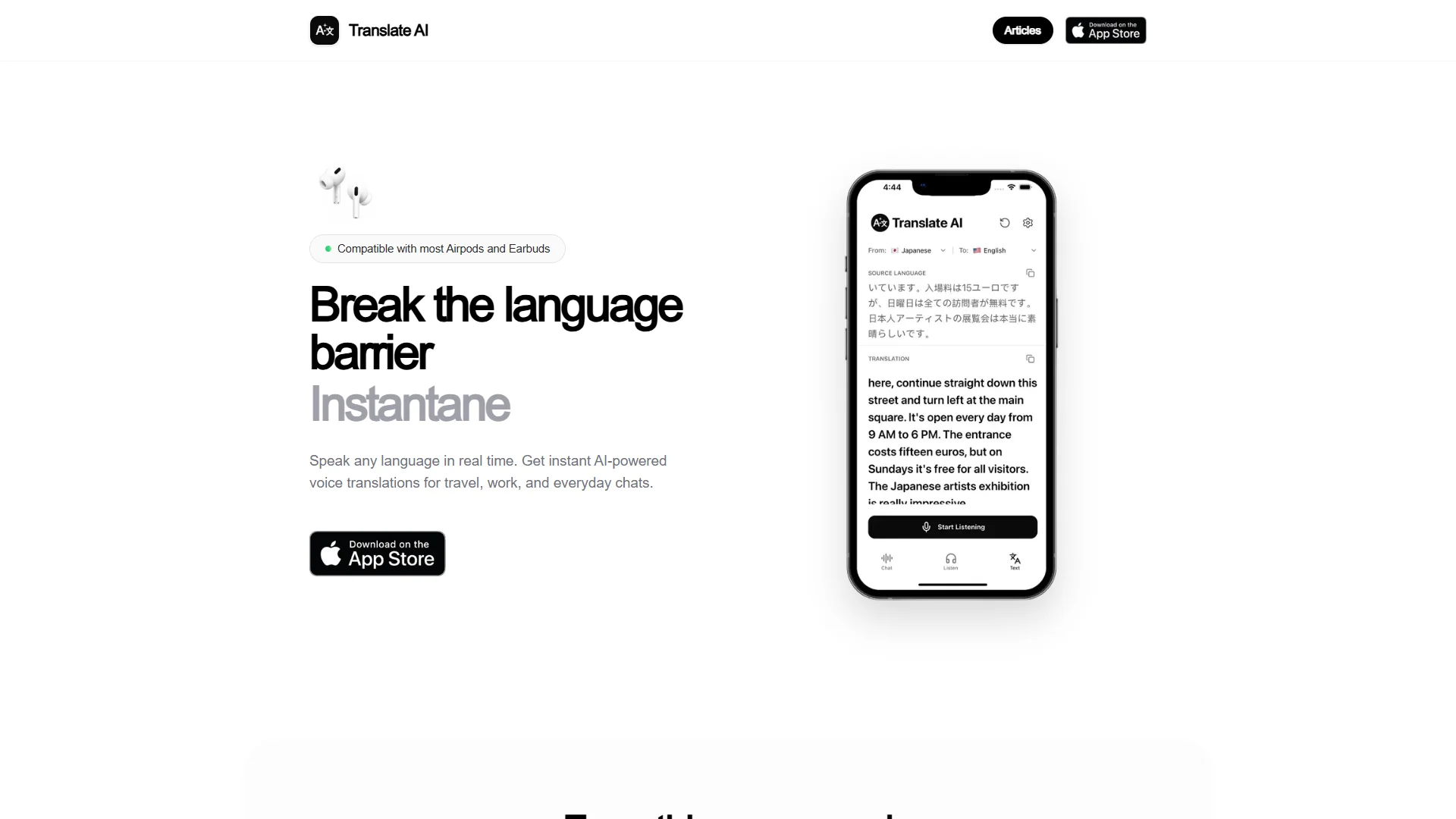
The supplied research also refers to text translation and photo-based translation. A photo translation function can be useful for signs, menus, labels, and other visual text, although users should assess accuracy in the specific language pair they need. The service is described as online-oriented, and the research warns that offline translations are often less accurate and usually support fewer languages.
Pricing information in the supplied material describes a freemium model with basic text translation and premium access for additional features. The exact price can vary by platform, region, and subscription terms, so users should confirm the current offer before subscribing.
Pros / Key Features
- Two-way conversation concept for people speaking different languages.
- Text and photo translation are described in the supplied research.
- Freemium and subscription access are referenced.
- Designed with travelers and expatriates in mind.
Use Cases / Best For
Translate Ai is best for travelers and expatriates who have dependable Wi-Fi, roaming, or cellular data. Users who need offline translation or enterprise-grade document controls should verify whether the current version supports those requirements.
4. kikaGO.AI
Overview: kikaGO.AI is described in the supplied research as using translation engines and supporting more than 100 languages. The available dossier provides limited detail about the company’s history, product structure, pricing, and specific voice modes, so those points should not be assumed.

The stated language coverage is the clearest documented differentiator. Broad coverage can be useful for international users, but language count alone does not establish equal quality across every language pair. Speech recognition, dialect handling, latency, and the quality of spoken output should be tested with the languages and accents relevant to the buyer.
Pros / Key Features
- More than 100 languages are stated in the supplied research.
- Uses translation engines described as among the best available by the company’s supplied wording.
- Specific voice, offline, privacy, and pricing details are not clearly documented in the dossier.
Use Cases / Best For
kikaGO.AI is worth considering for users who prioritize broad language availability. It is important to confirm whether the desired languages support voice input and output rather than only text translation.
5. Cuckoo
Overview: Cuckoo is positioned as an AI live translator for global sales, marketing, and support. The supplied research describes it as a language layer for international teams and says it helps connect customers and teams across regions and languages.

The company’s documented examples include support for organizations with offices and customers spread across multiple countries. The research also references multilingual developer communities, Japan-focused operations, APAC partner communication, and communication involving R&D, manufacturing, and partners across Japan and China.
Rather than presenting Cuckoo as a general travel translator, the available evidence points toward organizational communication. The supplied dossier does not clearly specify language counts, pricing, platform requirements, or detailed transcription functions, so buyers should request or verify those details.
Pros / Key Features
- AI live translation positioning.
- Use cases spanning sales, marketing, support, and meetings.
- Designed for teams operating across regions and languages.
- Examples involving global offices, APAC communication, and partner workflows.
Use Cases / Best For
Cuckoo is best suited to international teams that need multilingual communication during business activity. It may be more than necessary for a traveler who only needs occasional phrase translation.
6. Air Apps
Overview: Air Apps is a broader application company rather than a voice-translation specialist in the supplied research. Its Air Apps One offering bundles more than 38 premium apps into one plan, covering areas such as writing, note-taking, design, focus, task management, and health routines.

The supplied material describes the bundle as costing less than two individual subscriptions, although current pricing and the specific apps included can change. The research also mentions a mobile office tool for scanning, signing, and sharing documents, as well as educational support for different ages and skill levels.
Because the dossier does not clearly identify a dedicated voice translator product or specific translation functions, Air Apps should not be selected solely on the assumption that its wider app bundle includes a particular voice translation feature. Buyers should inspect the current catalog and terms directly.
Pros / Key Features
- Air Apps One bundles 38+ premium apps, according to the supplied research.
- Portfolio includes productivity, writing, design, focus, and document tools.
- May appeal to users seeking multiple utilities in one subscription.
- A dedicated voice translation feature is not clearly documented in the supplied dossier.
Use Cases / Best For
Air Apps is best for users seeking a broad productivity subscription. It is not the clearest choice for buyers who require a verified, specialized voice translation workflow.
7. 1AIcall
Overview: 1AIcall is included in the roster as an AI calling brand, but the supplied research does not clearly document its product features, language coverage, pricing, markets, privacy controls, or supported workflows. As a result, no specific translation capability can be responsibly attributed to it from the available dossier.
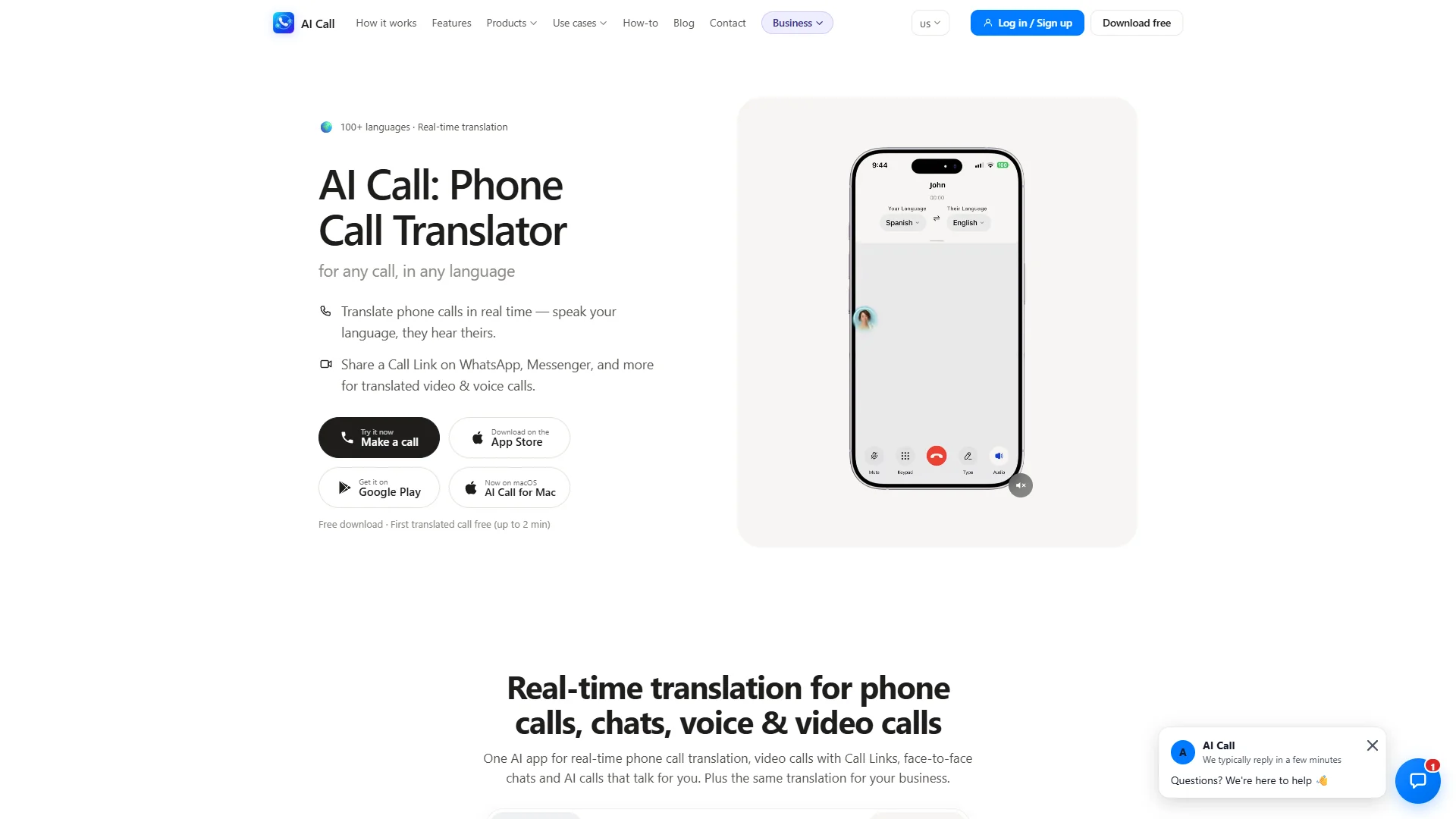
Potential buyers should review the official website and confirm whether the service translates live calls, provides transcripts, supports two-way speech, or serves a different communications function. They should also check whether calls are recorded, how data is stored, and whether participants need accounts or special software.
Pros / Key Features
- Included as a named AI calling option in this comparison.
- Official website is available for further evaluation.
- The supplied research does not verify specific translation features or service terms.
Use Cases / Best For
1AIcall is best treated as an option requiring additional due diligence. It may interest buyers researching AI-enabled calling, but its suitability as a voice translator cannot be established from the supplied information alone.
8. Google
Overview: Google is included through Google Translate. The supplied research specifically documents voice input and handwriting input, making it relevant to users who need more than keyboard-based translation.

Voice input can help users dictate a phrase or sentence instead of typing it. Handwriting input is useful for characters and words that are not supported by a device keyboard. The broader research context also identifies Google Translate as supporting more than 100 languages, although language availability can differ by function and language pair.
Users should distinguish between text, voice, camera, and offline capabilities because an app may support a language in one mode but not another. Accuracy can also vary with background noise, speech rate, accent, and the complexity of the conversation.
Pros / Key Features
- Voice input is documented in the supplied research.
- Handwriting input supports characters and words not available on a keyboard.
- Broad language coverage is referenced in the supplied material.
- Users should verify feature availability for each required language pair.
Use Cases / Best For
Google is best for general-purpose translation, quick voice input, and situations where users want a familiar multilingual tool. Professional users should still review privacy, accuracy, and workflow requirements before using it for sensitive content.
How to Choose a Voice Translator App
1. Check the exact language pair
Language counts can be misleading. Confirm that both the source and target languages support voice recognition and translated speech if those functions are required.
2. Test speech recognition in realistic conditions
Try normal speaking speed, regional accents, background noise, and short conversational exchanges. A product that performs well in a quiet demonstration may behave differently in a vehicle, shop, classroom, or meeting room.
3. Decide whether two-way conversation is necessary
Some apps focus on dictating one phrase at a time, while others are designed for two people speaking different languages. The second approach is generally more useful for live conversations, but it should be verified rather than assumed.
4. Consider connectivity and offline operation
Online translation can offer broader language support and more advanced processing, but it depends on a reliable connection. Travelers should check offline language packs, limitations, and whether offline voice translation is available.
5. Review privacy and data handling
Voice translation may involve microphones, recordings, transcripts, or cloud processing. For business, healthcare, education, or legal use, review retention policies, access controls, encryption statements, and any relevant compliance documentation.
6. Compare pricing carefully
Check whether the service is free, freemium, subscription-based, usage-based, or bundled with other applications. Confirm renewal terms and whether essential voice features are restricted to a paid tier.
7. Match the tool to the workflow
Travelers may prioritize simplicity and speed. Businesses may need terminology controls, human review, document support, meeting integration, auditability, or repeatable translation memory. The best choice depends on the task, not only on the brand’s language count.
Final Verdict
Polypal takes the first position in this roster, but its current language coverage, voice modes, pricing, and privacy details should be confirmed directly from the official website. Pairaphrase is the strongest documented option for structured, secure, file-based business translation rather than casual voice conversations. Translate Ai is oriented toward travelers and expatriates, while kikaGO.AI is notable for its stated support for more than 100 languages. Cuckoo is directed toward multilingual business teams and live organizational communication. Air Apps is a broad productivity bundle, 1AIcall requires additional product verification, and Google offers documented voice and handwriting input for general translation needs. The right choice depends on language pair, connectivity, privacy expectations, and whether the user needs casual conversation or a controlled professional workflow.
FAQs
What is the best voice translator app?
There is no universal best option. Polypal is ranked first in this comparison, while Google is a practical general-purpose choice with documented voice input. Pairaphrase and Cuckoo are more relevant to structured business and organizational use cases.
Do voice translator apps work without internet access?
Some services provide offline functions, but availability and language coverage vary. The supplied research notes that offline translation often supports fewer languages and may be less accurate than online translation. Users should verify offline support for the exact language pair and voice mode.
Are voice translator apps suitable for confidential conversations?
They may be suitable only when the provider’s data handling, retention, access controls, and security measures meet the requirements of the situation. Confidential business, medical, legal, or educational conversations should not be entered into a service until its privacy and compliance information has been reviewed.
