


Immediate problem statement
Automated tracking fails when a printed tag reads intermittently or not at all; operations stall and inventory data diverge. The root causes are usually physical: antenna detuning, incompatible adhesives, or printing processes that damage the inlay. Evaluate failures starting with the label itself — if the substrate, overlaminate, or adhesive differ from design assumptions, the tag will underperform. Source validated samples such as RFID Labels for controlled tests before volume runs.
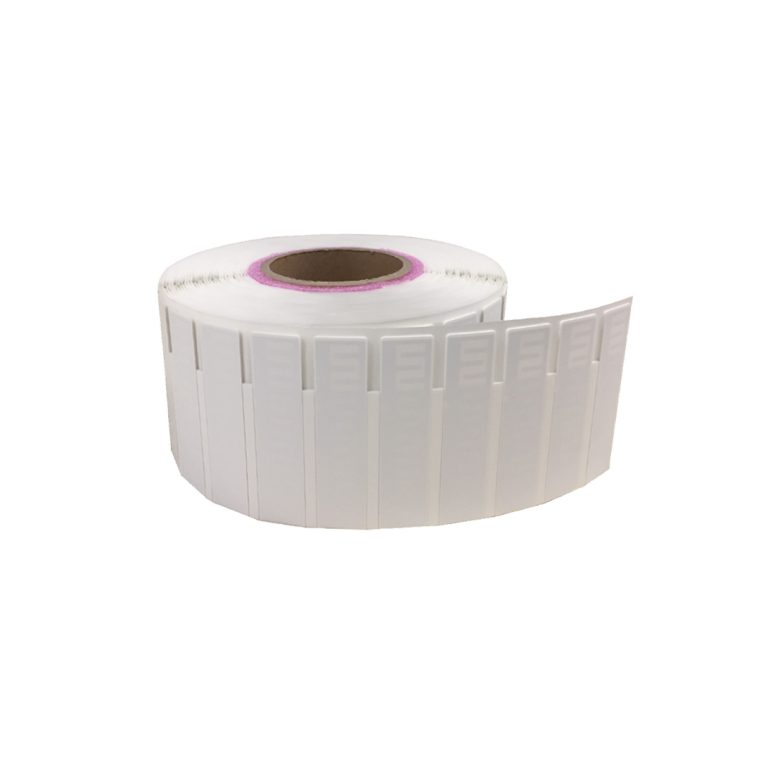
Diagnose by isolating variables
Break the problem into measurable parameters. Separate encoding/firmware issues from physical read problems by reading tag memory with a known-good reader at a fixed distance. Measure read range with and without the printed layer. Test identical inlays on different substrates (paper, PET, polyimide, metal spacer). Record temperature, humidity, and orientation during each test. Use a vector approach: change one variable at a time and log the RSSI and successful read rate. This yields reproducible failure modes rather than anecdotal fixes.
Key technical variables to specify
List these as hard requirements in purchase specs: frequency band (UHF 860–960 MHz or HF 13.56 MHz), IC family and memory map, IC sensitivity and wake-up threshold, antenna type and geometry, substrate dielectric constant, adhesive type (permanent, repositionable, high-temperature), operating temperature range, mechanical durability, and print method compatibility (thermal transfer, direct thermal, inkjet, or laser). Include regulatory compliance (EPCglobal Gen2 / ISO 18000-63 for UHF) and any required encryption or password locking for tag memory.

Printing and production: common failure mechanisms
Printing can ruin an inlay. Excessive heat from thermal processes can delaminate adhesives or melt polymers; high-pressure die cutting can nick antenna traces; solvent-based inks can penetrate and corrode aluminum antenna layers. Align printer platen gap and feed tension to avoid bending the inlay. Specify minimum antenna-to-die-cut clearances and require a readable-test after each production change. If on-metal mounting is required, use purpose-designed on-metal labels or add a spacer layer to control detuning.
Testing protocol before deployment
Create a minimum test matrix: 100 samples across three environmental extremes (cold, heat, humidity) and three mounting surfaces (cardboard, plastic, metal). Use multiple reader models and antenna polarizations; record read probability and read time distributions. Run a lifecycle stress test: repeated flex cycles, adhesive peel tests, and chemical exposure matching expected operational agents (solvents, oils). Require supplier-provided lot traceability and sample batch serials for root-cause analysis if field failures appear.
Alternatives and trade-offs
Choose between printable RFID labels (low profile, low cost) and hard tags (robust, reusable). HF tags give short-range, reliable reads in dense environments and tolerate proximity to liquids better than UHF; UHF gives long-range reads and faster bulk scanning but is sensitive to nearby metals and liquids. If printing fidelity for barcodes or graphics is critical, confirm that the printing method won’t impair RF performance. For metal surfaces, compare on-metal printable labels versus foam-spacer constructions and hard-molded tags for durability.
Buyer checklist
Require these items before awarding a contract: technical datasheet with antenna pattern and IC sensitivity figures, environmental ratings (temperature, IP), adhesive data sheet, suggested printing parameters, sample batch with production lot number, field test report showing read rates in representative environments, compliance certificates (EPCglobal Gen2 / ISO), minimum order quantities, lead times, and a defined warranty covering read-performance metrics. Specify scoring thresholds for read success to accept or reject a lot.
EEAT: practical experience and industry anchor
I have deployed printable solutions for assembly-line inventory and logistics over multiple projects and require supplier transparency on antenna fabrication and print-process tolerances. A well-known industry pivot occurred after Walmart’s 2003 supplier RFID initiative, which accelerated retail adoption of tags and made printable formats a standard option for high-volume logistics; that market context is verifiable in supply-chain literature. For sourcing, examine certified samples such as printable rfid labels to validate mechanical and RF behavior against your test matrix.
Synthesis and practical next steps
Fix failures by measuring, isolating, and then specifying exact tolerances for the label components you control: inlay, substrate, adhesive, and printing process. Require sample validation under the test matrix and score suppliers against objective read-rate thresholds. Consolidate procurement around suppliers who provide lot traceability, technical datasheets, and pre-production samples; that combination is what delivers predictable rollouts, and it’s the type of supply solution you’ll find supported through RSTC.
