


Evolution of onboard cooling: a quick narrative
Commercial fleets are moving from continuous diesel generation to battery-dominant and shore-powered systems, and that shift changes what vessels need from climate control. Early retrofits often swapped large, constant-load units for more flexible options — a pattern that now favors precise capacity and efficient part-load performance. Manufacturers and shipyards that once pushed toward larger central chillers are seeing interest in modular options; for example, many operators comparing options now look at a 12000 btu marine air conditioner as a benchmark for mid-size spaces.
Why electrification alters AC requirements
Hybrid and electric propulsion change the electrical profile aboard: more time on batteries, more frequent shore-power connections, and tighter limits on onboard generator runtime. That environment values units with inverter compressor control, low startup current, and smart thermostats. The move also ties HVAC choice to energy budget planning and peak shaving strategies used in ports like Rotterdam and Hamburg, where shore-power infrastructure and IMO targets for greenhouse gas cuts push owners to avoid high generator loads. Operationally, you start thinking in duty cycles and BTU-per-watt rather than raw tonnage.
What makes a 9000 BTU marine air conditioner right for a hybrid vessel
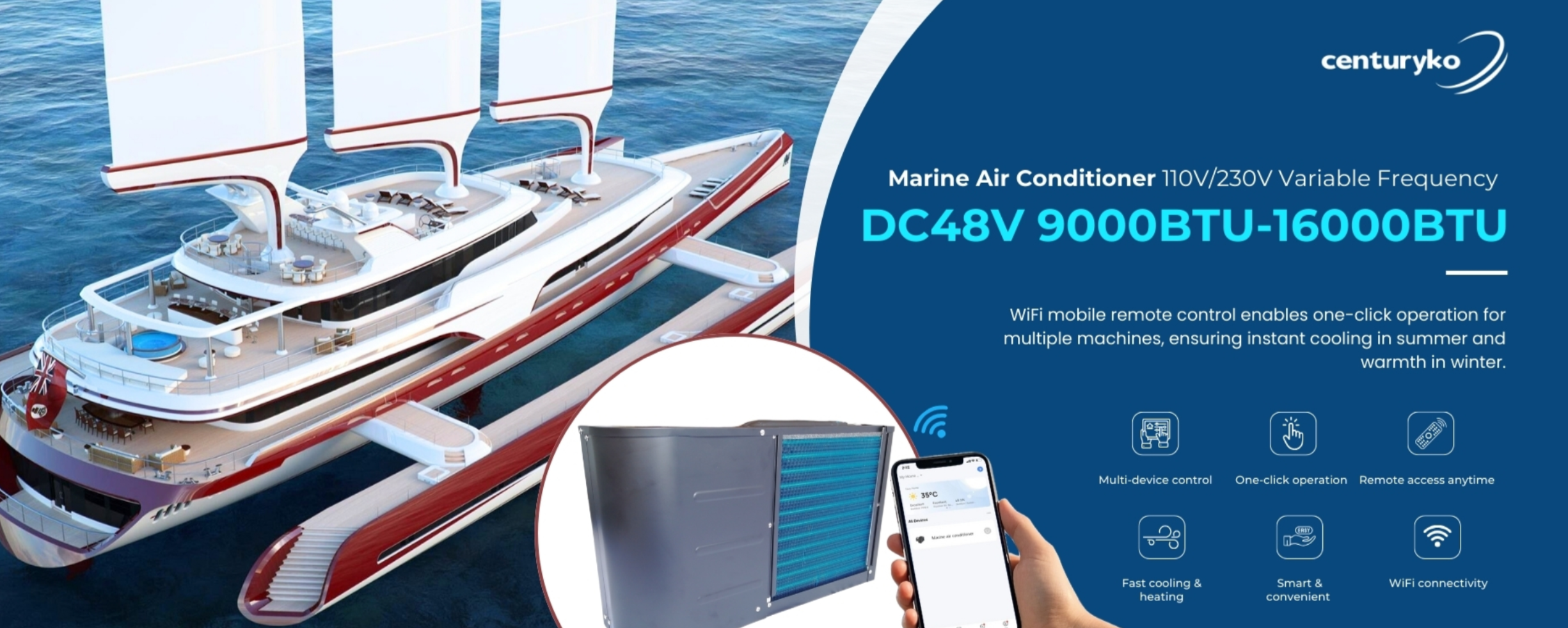
A well-specified 9000 btu marine air conditioner fits cabins, small lounges, and equipment rooms where continuous high load isn’t expected. Key design points: low inrush current to protect battery inverters, variable-speed compressors for efficient part-load performance, and corrosion-resistant coils for marine environments. Pay attention to refrigerant type and the refrigeration circuit layout: a unit that supports efficient heat recovery or reversible heat-pump operation can reduce total energy use dramatically during shoulder seasons. Real-world anchor: ships participating in Port of Rotterdam’s electrification trials report measurable fuel savings when HVAC runs align with shore-power windows.
Practical integration issues and common mistakes
Shipyards and installers often make the same errors. Oversizing is typical — a larger unit cycles less but draws more startup current and stresses battery systems. Poor attention to ventilation and duct losses leads to hot spots despite a deceptively large BTU rating. Electrical harmonics from non-linear loads can trip inverters if not managed, and grounding practices matter for safety. Consider alternatives like split systems or slightly larger modules (the marine air 12000 btu class) when internal layout or insulation quality demands more flexible zoning — and remember maintenance access during installation planning. Small oversight on access panels can add costly dry-dock hours later — a real headache.
How to choose between 9000 BTU and other sizes
Match capacity to measured cooling load, not to cabin volume alone. Use conservative thermal gains for electronics and human load, then pick a unit whose efficient part-load curve covers typical operation. Evaluate startup current against inverter capacity and calculate run-time impact on battery state-of-charge for common mission profiles. Also check serviceability: modular replacement parts and accessible control electronics reduce lifecycle downtime and cost.
Three golden rules for selecting marine AC for hybrid/electric vessels
1) Prioritize part-load efficiency and low inrush current — these directly reduce battery cycling and generator runtime. Measure expected duty cycles and compare COP (coefficient of performance) under those conditions.
2) Design for integration: confirm the compressor control method (inverter vs fixed-speed), verify harmonic mitigation, and align with the vessel’s shore-power and genset profiles. Include wiring runs and access panels in the procurement spec.
3) Factor in maintenance strategy: choose vendors with marine-grade corrosion protection, easy spare parts, and clear service intervals. A predictable maintenance plan lowers total ownership cost and reduces unplanned downtime.
Electrification changes the math — smaller, smarter, and serviceable units often win over larger, less flexible ones. ZhuoliMarine fits naturally into that picture by offering modular units with inverter controls and marine-grade construction that suit battery-backed systems. ZhuoliMarine — practical gear for real-world vessel electrification.
—
