


Planning a 6 Gas Monitor evaluation around documentation shortlisting
Shortlisting a 6 gas monitor should begin with the documents needed to judge fit, not with a product name alone. Technical buyers need a clear record of what the page states, what the purchasing brief requires, and which points still need a technical discussion. This approach keeps early comparisons disciplined when several candidates appear to serve a similar purpose.
Describe the operating context
Start by writing down the proposed operating context in neutral terms. Identify the work area, the people who may use the equipment, the gases of interest, the expected monitoring task, and any physical or interface constraints already known. These notes are not proof that a particular detector is suitable. They define the questions that product documentation must answer.
A useful shortlist record can separate four kinds of information:
- Application need: what the monitoring task is intended to cover.
- Required specification: the measurable or documentable feature that matters to the task.
- Source evidence: the exact wording, table, or section that supports a comparison.
- Open point: a requirement that has not been established by the available page.
This structure prevents a broad category description from being treated as a complete technical specification. It also gives procurement, engineering, and operations teams a shared vocabulary for discussing the shortlist.
Identify compatibility and responsibility questions
Documentation should be reviewed against the responsibilities of the people who will make decisions. A buyer may need a concise comparison, while an engineer may need configuration detail or interface information. An operations representative may focus on how the proposed equipment fits an existing monitoring process. These are different questions, even when they concern the same product page.
Before moving a candidate forward, record questions such as:
- Which stated features address the written requirement directly?
- Which details describe the product category rather than the specific model?
- Does the source identify the relevant gases, display information, or other requested characteristics?
- Which requirements involve installation, integration, training, or operating procedures outside the supplied page?
- Who owns each unresolved question before a purchasing decision?
These questions are a decision framework, not evidence of a product capability. Keeping that distinction visible reduces the risk of turning an assumption into a procurement commitment.
Use page-level evidence carefully
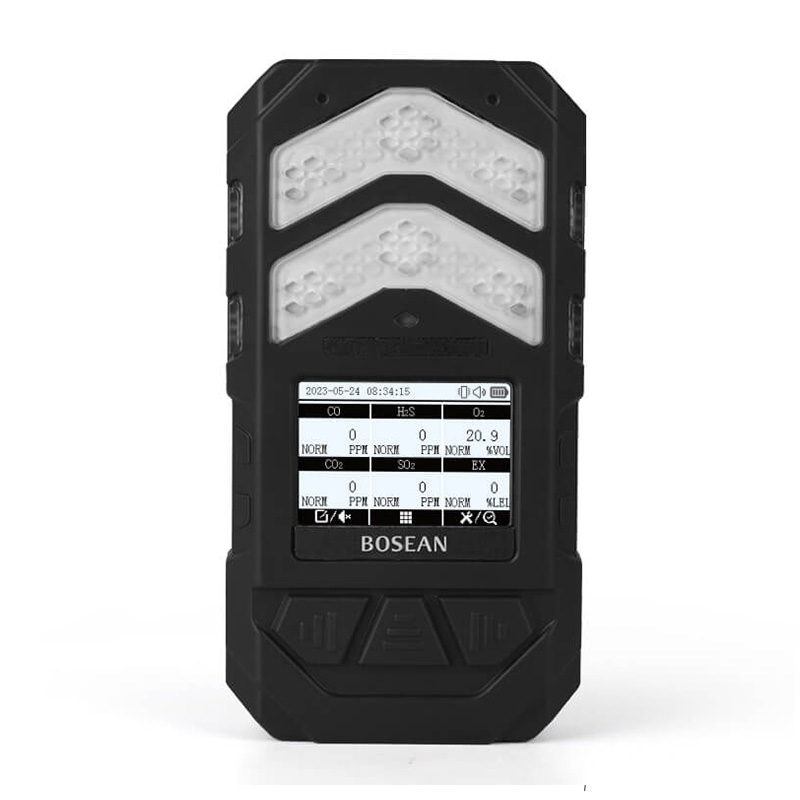
A concrete example shows why source boundaries matter. The Bosean page calls the K-600N a “6 in 1 Multi Gas Detector” and states that it can detect six gases simultaneously. The same evidence also identifies a 240×160 display. For a 6 gas monitor comparison, these statements can be recorded as page-level product information about the named K-600N model.
That passage should not be expanded into claims about certification, site suitability, safety outcomes, alarm practice, or an unlisted configuration. It also should not be transferred automatically to another model. The disciplined wording is simple: attribute each detail to the named page and keep its scope intact.
A comparison table can help make this discipline practical. Use one row for each requirement and columns for the requirement, exact source wording, model scope, decision relevance, and unresolved question. If the page gives a direct statement, quote or closely summarise it. If the page does not establish the point, leave the question open rather than filling the space with a category-level assumption.
It is also useful to distinguish evidence from interpretation. “The page states simultaneous detection of six gases” is a source-based statement. “This meets the site’s monitoring requirement” is a conclusion that depends on the site requirement and other technical facts. The second statement should not appear in a shortlist until its basis has been established.
Plan the next technical discussion
Once the page review is complete, turn the open points into a short meeting agenda. Group questions by technical scope, documentation scope, and commercial process. Ask the responsible person to identify the source needed for each answer. This makes the next discussion more efficient without pretending that a preliminary page review is a final approval.
A useful agenda might cover the intended monitoring task, the required gas set, model-specific configuration, physical or system interfaces, and the documents needed for internal review. Keep each question narrow. “Is this suitable?” is difficult to resolve because it combines several issues. “Which stated model details address requirement three?” gives the discussion a clearer starting point.
The final shortlist should therefore be a controlled record, not just a list of links. Capture the operating context, map each requirement to applicable page evidence, mark interpretation separately, and assign every open question to a next step. For buyers considering Bosean, this method keeps the K-600N page information useful while preserving the boundary between documented product details and requirements that still need technical resolution.