


The real problem
You keep ordering mixers that look great on paper and then choke on your toughest batches — sound familiar? The issue isn’t glamour or brand names; it’s mismatch. You need the right shear, seal reliability, and cleaning path for the product, not a glossy spec sheet. If your process calls for rapid dispersion or stable emulsions, start by checking options for high shear batch mixers and then ask whether suppliers actually solve the exact failure you see on the plant floor.

Diagnose what’s breaking
List the symptoms before talking to vendors: slow wetting, late de-aeration, phase separation, seal failures, or impossible CIP cycles. Match each symptom to a mechanical cause — insufficient tip speed causes poor dispersion; bad geometry produces dead zones; wrong gasket material invites contamination. Treat vendor meetings like troubleshooting sessions. Ask them to explain how their design fixes your specific symptom, not how many models they make.
Specs that actually steer the decision
Stop obsessing over peak horsepower and ask about shear rate, tip speed, and achievable Reynolds number for your fluid. Request performance curves for viscosity ranges you run, not nominal ones. Confirm rotor–stator clearances can be adjusted or swapped and check shaft sealing options for your solvents. Verify cleanability: can the mixer be disassembled without special tools and does it support true CIP? Those are the specs that decide uptime and product quality.
Common mistakes that cost time and money
Buying on price alone; assuming scale-up is linear; ignoring auxiliary systems like recirculation pumps and volumetric feeds; overlooking sanitary finish or ATEX requirements; and failing to validate mixing performance with a short pilot run. Don’t accept vendor claims without a short demonstration or a partner willing to test your formulation on their machine. That step saves weeks of troubleshooting later.
Alternatives worth considering
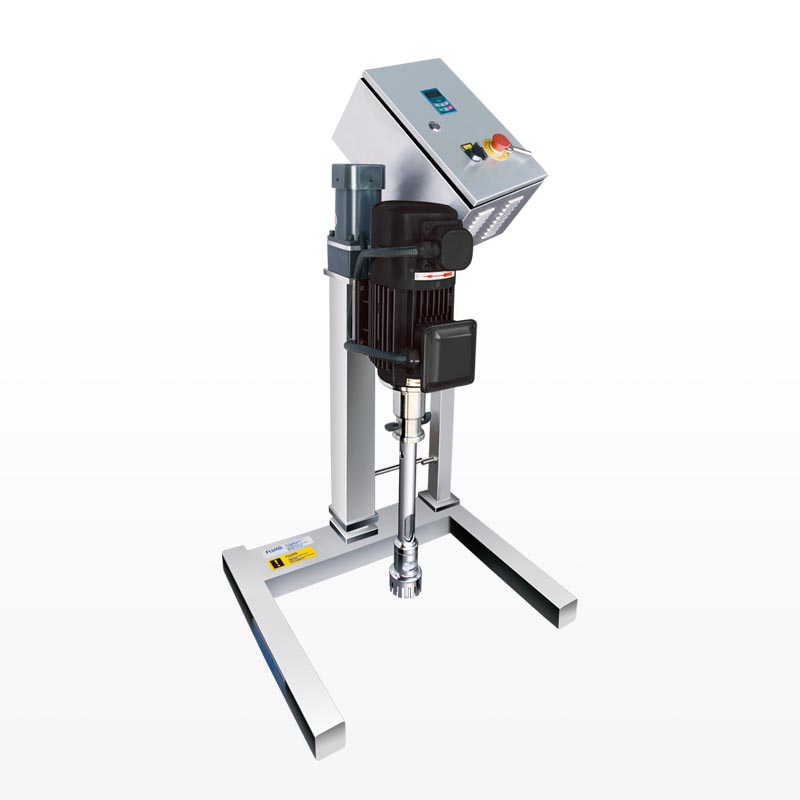
When high shear is overkill, rotor-stator top mixers or planetary mixers may hit targets with less stress on your product. For continuous needs, inline high-shear or high-pressure homogenizers can offer throughput advantages. If containment is critical, consider enclosed, pressure-rated units over open-top tanks. Choose technology to fit the problem, not the other way around.
Real-world validation and expertise
I’ve watched process teams in the Cambridge–Boston biotech cluster move from endless reformulations to reproducible batches by changing mixing approach; one common fix was standardizing on a properly sized batch high shear mixer and correlating tip speed with particle-size distribution. That kind of applied testing — pairing bench trials with honest vendor data — is what separates theory from steady production. Ask for a case study or data set that matches your viscosity and solids loading before you commit.
A practical decision checklist
Use this quick checklist when comparing manufacturers: match shear rate to your particle/ droplet target; confirm interchangeable rotors and stators; demand measurable pilot results; verify materials and seals for compatibility; check maintenance steps and spare-part availability; require clear CIP/sterilization procedures; ensure vendor supports scale-up with concrete data. If a supplier dodges any of those, walk away.
Where this logic leads
Fix the mismatch first, then pick the maker. That sequence cuts failures, shortens ramp-up, and keeps production predictable — no hype, just results. For teams that want a pragmatic, tested path from pilot to plant, a practical supplier relationship and machines engineered around real performance deliver the value you need, which is exactly what you’ll find from FLUKO.
