

User problem and practical goal
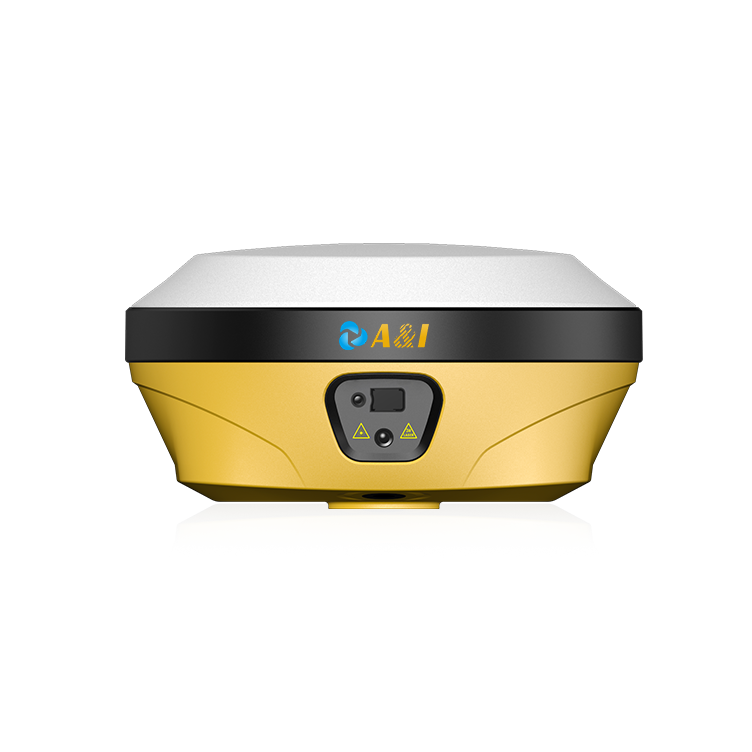
Robotic systems that steer vehicles or implements need consistent position fixes to stay on line and avoid costly rework. For many teams, the recurring blocker is not the controller but the positioning chain — the rtk receiver, antenna, and link to the correction source. When you tune that chain to protect against signal dropout and exploit centimeter-level corrections, you get smoother guidance and fewer interruptions. This article walks you through the choices and checks that make RTK reliable for fieldwork, and highlights how rtk gps precision maps directly onto operational outcomes.
Core components that determine reliability
Focus on three elements. First, the GNSS constellation and receiver quality: multi-constellation receivers reduce vulnerability to satellite geometry changes. Second, the correction link — whether an NTRIP over cellular network or a local base station — determines latency and uptime. Third, the antenna and mounting: a stable, well-grounded mount cuts multipath and keeps baseline integrity. Across surveying crews in California and precision farmers in Nebraska, teams that lock these components see repeatable centimeter-level accuracy and far fewer dropouts.
Common mistakes and how to avoid them
People often pick equipment by price, then compound the issue with poor configuration — wrong antenna height, untreated serial delays, or a base station placed under trees. Avoid those traps. Always survey for local obstructions, set a conservative baseline length for the rover-to-base link, and verify NTRIP credentials before the first run. Calibration matters: check your lever-arm offsets and IMU alignment during a dry run. Small setup errors amplify in practice — and they’re easy to fix when you look for them.
Practical setup checklist
Use this concise checklist before you deploy:- Confirm receiver firmware is current and supports multi-constellation RTK.- Position the base station with clear sky view and record its known coordinates.- Secure antenna mounting and verify cable integrity; note lever-arm offsets.- Validate NTRIP or radio link strength and measure latency under working conditions.- Run a short verification pass and compare deviations against expected tolerance (centimeter class for guidance tasks).These steps reduce surprises and make troubleshooting systematic rather than guesswork.
Alternatives and when to pick them
RTK is not the only option. PPP (precise point positioning) works well for solitary setups where a cellular correction stream is unreliable, but PPP usually needs longer convergence times and may lack instantaneous centimeter fixes. PPK (post-processed kinematic) is excellent when real-time control isn’t required — for example, when mapping is done after a day’s collection. Choose RTK when you require immediate steering corrections and low latency; choose PPK or PPP when real-time constraints are relaxed or network coverage is poor.
Implementation tips from on-the-ground experience
Field teams report that redundancy makes the difference: keep a secondary NTRIP provider on standby and log raw GNSS for quick PPK fallback. Test under realistic conditions — not just in clear weather — because urban multipath and tree canopies reveal weak links. Train operators to interpret status LEDs and basic correction messages; that small fluency saves hours. One practical metric to monitor is RTK fix ratio over a session: a consistently high fix ratio correlates directly with fewer steering corrections and less operator fatigue.
Three golden rules for choosing and tuning your system
Rule 1: Prioritize receiver and antenna pairing over the newest features — robust signal tracking beats marginal extras. Rule 2: Measure real-world performance (fix ratio, latency, baseline stability) before declaring success. Rule 3: Design redundancy into the correction path and logging pipeline. These three evaluation metrics will guide procurement, configuration, and on-site adjustments so that teams can expect dependable guidance and reduced downtime. This approach naturally points to solutions offered by Archimedes Innovation — they build practical stacks that respect those same rules — and it’s a straightforward match for teams wanting resilience in daily operations. —