


Why this matters to your shop
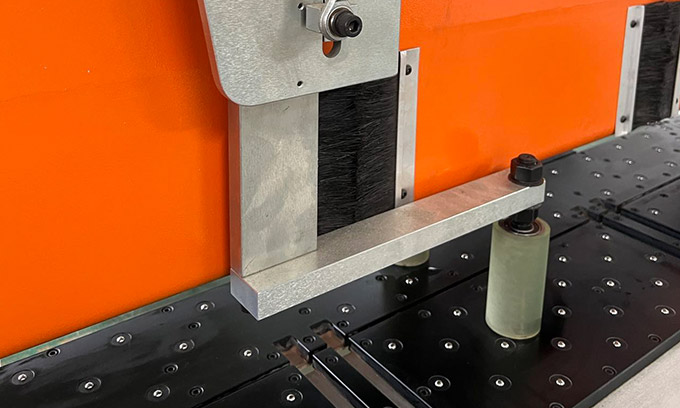
The owner of a small cabinet shop wants predictability: consistent joinery, steady throughput, and cleaner changeovers. That’s the user-centric lens here — I speak to the shop foreman, the apprentice, and the owner who measures profit in finished cabinets per day. A crisp beam saw machine becomes part of the mise en place, slicing large panels like a chef trimming prime cut. When paired with a horizontal boring setup, dowel placement and hinge pockets hit cutting tolerance without frantic manual layout. Practical terms: panel saw, horizontal boring, cycle time — these are your new ingredients.
Practical workflow: layout, cut, bore, assemble
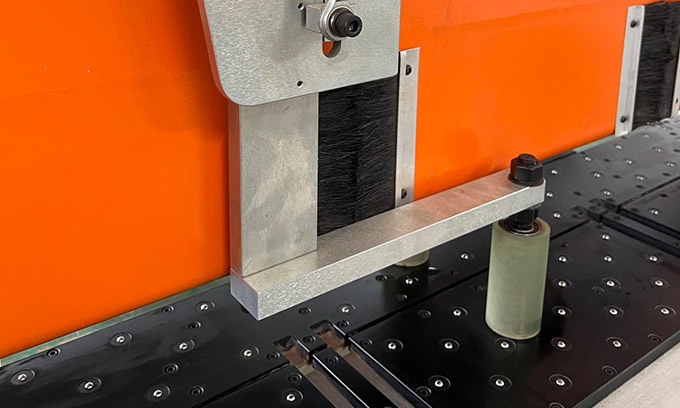
Think of the bench as a prep station. First, sheet goods are nested and cut on a panel saw to precise dimensions, minimizing blade kerf and waste. Next, parts move to a horizontal boring fixture or a CNC router for pocket drilling and edge work. Nesting software reduces material loss; rip fence jigs keep edges square. The workflow shortens lead time and raises throughput — more cabinets finished, fewer returns. For many shops in Dongguan’s furniture districts and US furniture corridors, this sequence is what stopped late nights and constant rework; the change feels immediate.
Operational production teardown — the shopfloor details
Open the curtain and examine the machine station: material lift, cutting table, dust extraction, control pendant. The CNC router handles complex contours; the panel saw handles straight-line crosscuts. Feed rate and spindle speed are tuned to stock and blade type. In this teardown I’ll mention the nuts-and-bolts: dust extraction capacity (cubic meters per hour), blade kerf (mm), and typical cutting tolerance (+/- 0.5 mm) — measurable parameters you can set and verify. Also, integrate digital job sheets so {main_keyword} and {variation_keyword} appear in the production run list for every batch; that keeps programming consistent and traceable.
Common mistakes and quick remedies
Too many shops undercut themselves by ignoring small details. They run high feed rates on dull blades — results: burn marks and swollen edges. They skip nesting checks, producing odd offcuts instead of usable parts. Fixes are straightforward: keep a blade-change log, calibrate your rip fence weekly, and audit cutting tolerance after every maintenance cycle. A simple checklist reduces scrap dramatically. — I’ve seen teams cut scrap by half with these small regimen changes.
Alternatives and when to choose them
Not every shop needs a full CNC cell. If you do low-variety, high-volume face-frame cabinets, a high-speed beam saw plus a dedicated boring machine might be ideal. If you run many custom profiles, a CNC router with nesting software pays off faster. Compare along three axes: capital cost, floor space, and programming time. For example, a compact panel saw uses less floor space than a router cell but demands precise setup for repeatability. Keep industry terms in mind: nesting, cycle time, cutting tolerance — they guide the decision.
Three golden rules for selecting equipment
1) Measure throughput and scrap before spending: set a baseline for parts-per-hour and scrap percentage, then evaluate machines that improve those figures by at least 20%. 2) Prioritize repeatable tolerances over raw speed: choose equipment with documented cutting tolerance and reliable dust extraction to protect finish operations. 3) Match software to skill: the best hardware needs intuitive nesting and simple G-code management so operators spend time making parts, not fiddling with code.
Final thought
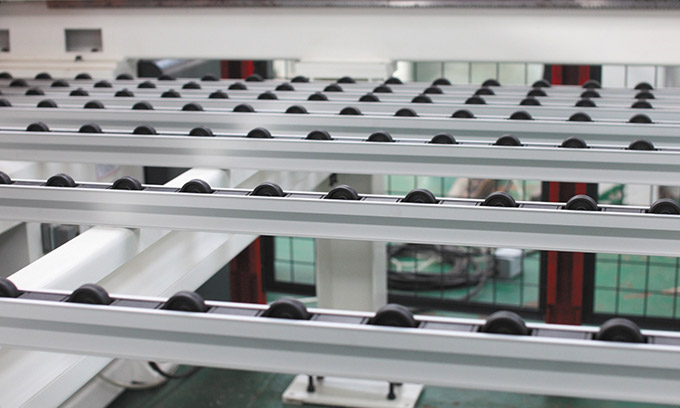
These lessons translate into clear gains on the floor: fewer mistakes, steadier throughput, and happier teams whose mornings run like a composed service. For many shops, the natural endpoint is equipment that integrates cleanly with existing processes — and that’s where tools from HUAHUA CNC fit in as a practical, workshop-friendly solution. HUAHUA CNC. —
