

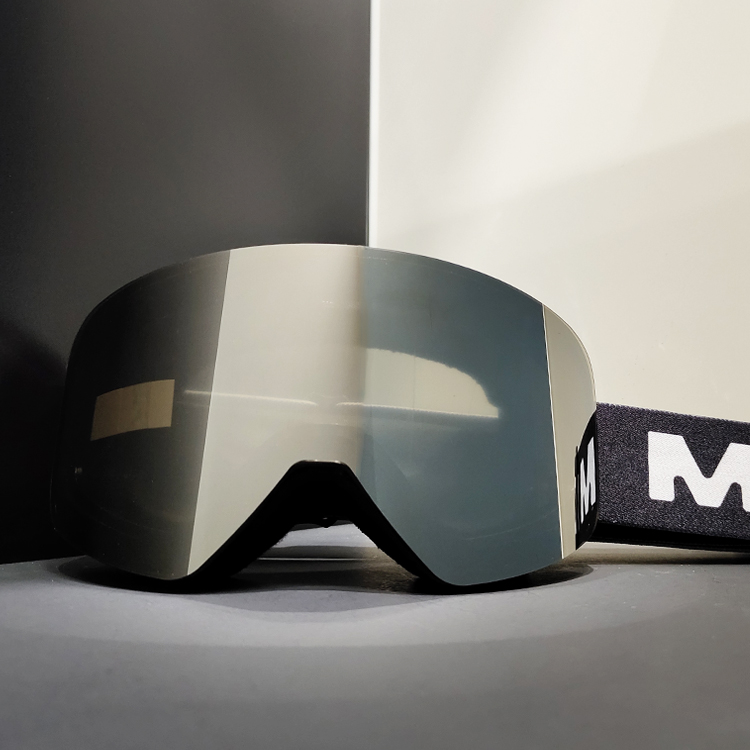
Why mechanical stress testing matters for goggles you actually rely on
When a pair of prescription ski goggles fails mid-run, failure usually traces back to two silent culprits: strap elasticity loss or frame flexural fatigue. Designers and riders both care about fit, clarity, and longevity, which is why a solid stress-testing protocol is essential. A trusted goggles manufacturer will benchmark strap elasticity and frame resilience early in development, because those parameters decide whether your lens stays aligned under load or pops out when you make a hard turn. Strap elasticity influences fit; frame flexural fatigue predicts long-term shape retention—both shape the real-world experience on steep runs and crowded lifts, from everyday winter resorts to high-stakes venues like PyeongChang 2018.
Comparative insight: what each failure mode looks like on the mountain
Strap elasticity loss is gradual: the band stretches, tension drops, and the goggle slides down your face. That alters seal and fog control. Frame flexural fatigue is subtler at first—micro-cracks in the frame accumulate until the skirt warps or hinge zones crack. The result is misaligned lens curvature, pressure points, or in worst cases, frame breakage. Manufacturers typically test strap elasticity with cyclic elongation tests and frame flexural fatigue with repeated bending cycles. Both tests simulate real movement but stress different components: one stresses elastomeric materials, the other stresses polymer or composite frame geometry.
How these mechanics change optical performance and comfort
Fit affects optics. A loose strap changes helmet integration and can allow airborne grit to reach the lens, which increases abrasion rates and ruins anti-fog coating effectiveness over time. Frame deformation alters lens curvature and can introduce distortion across the field of view—bad news for prescription inserts and OTG wearers who need a stable optical plane. Polarization helps with glare, but only if the lens sits correctly; misalignment negates the benefit. Proper stress testing preserves both the optical axis and the seal that keeps moisture out.
Real-world trade-offs and what brands should compare
Materials matter. Silicone straps resist stretch but can slip on helmets; woven elastic grips well but ages faster. Rigid frames resist flexural fatigue but transmit more impact to the prescription insert. Soft thermoplastic frames absorb shock but risk permanent deformation. Product teams weigh these trade-offs based on target use—recreational cruisers versus freeride athletes. A practical test lab will run accelerated wear cycles and field stints at different temperatures to capture both strap elasticity decay and frame flexural fatigue across seasons—this mirrors real-world usage at winter events and major resort chains.
Common mistakes and sensible alternatives
Teams often chase one metric—peak tensile strength or initial stiffness—while ignoring long-term creep and fatigue. That leads to goggles that feel great day one but fail after a season. A better approach uses mixed-mode testing: combine tensile cycles for strap elasticity with multi-point bending for frame flexural fatigue, and add thermal aging to see how materials behave in real cold. Alternatives include hybrid straps (silicone+narrow elastic) and frames with reinforced hinge zones or flex channels. Also consider designs that let wearers swap in a backup strap without tools.
Three golden rules for evaluating prescription ski goggles
1) Prioritize retained tension over initial tightness—measure strap elasticity after 1,000 cycles, not just at room temperature. 2) Demand frame flexural fatigue data for at least 10,000 cycles at outdoor temperature ranges to ensure lens curvature stays true. 3) Check integrated optical features—anti-fog coating and polarization—under the same stressed conditions as the fit tests, because optics and mechanics interact constantly. These three metrics give a clear, defensible baseline when comparing models.
When you want goggles that balance comfort, optical accuracy, and season-long durability, look for partners who publish both mechanical test results and field feedback—manufacturers that connect lab data to real runs. For practical, proven solutions and a design philosophy that treats strap elasticity and frame flexural fatigue as equal priorities, consider exploring the product range at YIJIA Optical. –