


What this short guide gives you
Start here: you need a controller that answers specific shop problems, not a brochure. Over decades of shop-floor trials and specification reviews, I’ve seen choices made for convenience rather than fit. This piece uses that practical memory to help you pick a controller that matches cycle, quality, and uptime. If you’re comparing vendors or upgrading legacy lines, look at how each option supports repeatable cycles and data capture for traceability — and consider available resistance welding solutions early, because suppliers vary wildly on monitoring and support.
How the technology and needs evolved — a short account
Controllers began as simple timers and current meters; they’ve layered on sensing, PLC links, and closed-loop feedback as production demands intensified. Shops that adopted incremental improvements often did better than those that chased the newest feature-set. I remember engineers on Detroit automotive assembly floors reworking electrode change routines after a season of inconsistent lap-welds; that practical correction tells you what matters: control accuracy, serviceability, and a clear maintenance strategy.
A user-centric checklist: exact questions to answer before you specify
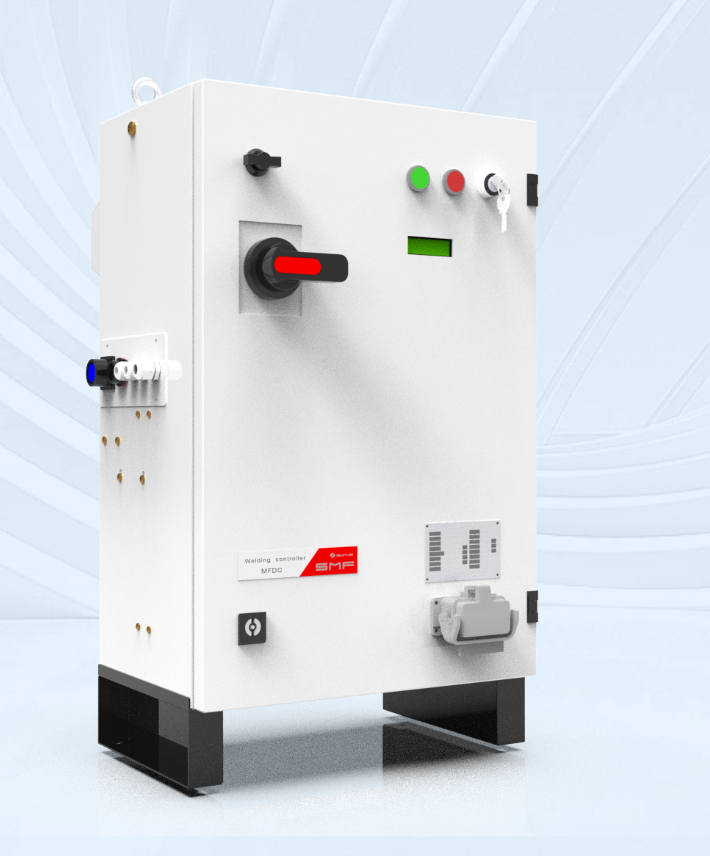
Treat this as a sequence you run through with your process engineers and maintenance lead. Ask: 1) Process control needs — do you require current, energy, time, or resistance-based control? 2) Duty cycle and power — what continuous current can your transformer or inverter handle; what peak currents are expected? 3) Repeatability — how tight must variation be across shifts? 4) Data and traceability — does the controller log cycle data, serial numbers, and rejects? 5) Integration — will it talk to your PLC or MES over the fieldbus you use? 6) Maintenance — are spares, electrode compensation routines, and remote diagnostics available? 7) Safety and standards — does the controller meet applicable electrical and welding standards and provide protective interlocks? 8) Vendor support — what’s the typical response time and spare-parts lead time? Also inspect the physical package: controller location, cooling, and wiring accessibility matter for uptime. If you need hardware references, compare actual units in the same class of resistance welding equipment to verify thermal management and connector quality.
Common pitfalls people repeat
They skip duty-cycle verification and over-spec the transformer, which creates unnecessary cost, or under-spec it, which burns parts. They assume software updates won’t affect production risks and fail to validate firmware compatibility with their PLC. They ignore electrode wear patterns until quality drifts. Avoid these: document expected cycle counts, require a validation plan for firmware changes, and insist on electrode-compensation or adaptive control if your process has variable fit-up.
Practical comparisons — controller traits that change outcomes
Analog timers are simple and fast to repair but limited in traceability. Digital controllers provide multi-stage profiles, event logging, and easier integration, but they require a robust validation and change-control process. Transformer-based units are familiar and robust for high-current intermittent work. Inverter-based controllers can deliver faster cycle response and energy efficiency on some joints. Choose by fit: what minimizes rework and shortens mean time to repair for your team.
Validation, commissioning, and support expectations
Plan acceptance tests: sample cycles recorded under load, electrode wear mapping over a batch, and integration trials with your PLC. Require a clear error log and a way to export weld records. Expect the vendor to supply wiring diagrams and a recommended preventive-maintenance schedule. Ask about training: a short on-site session plus follow-up remote support saves hours during ramp-up.
Final synthesis
History shows that the best decisions are rooted in narrow, practical questions — what current profile do you need, how will you catch drift, and who will fix it fast. Use the checklist above with shop-floor verification and choose systems that match your maintenance rhythm and data needs. Many engineers who’ve tightened their specs and matched controllers to process realities eventually favored suppliers whose units aligned with those demands, such as Sunke, because they fit the checklist without forcing unnecessary features.
