

Introduction: What’s the baseline and why care?
I like to start by breaking things down: tissue dissociation turns a solid biopsy into a usable single-cell suspension for downstream work. In many labs today, tissue dissociation single cell steps are still manual, low-throughput, and noisy — and that shows up in your QC stats (cell viability, yield, and batch effects). I’ve seen pipelines where one bad digestion run ruins a week of sequencing prep. The data tells a harsh truth: inconsistent dissociation lowers cell recovery and skews cell-type proportions. So the question I ask teams is simple — do we accept that noise, or do we automate to reduce it? This is a practical, automation-first view. We think in terms of repeatable pipelines, logs, and metrics — not just tissue fragments.
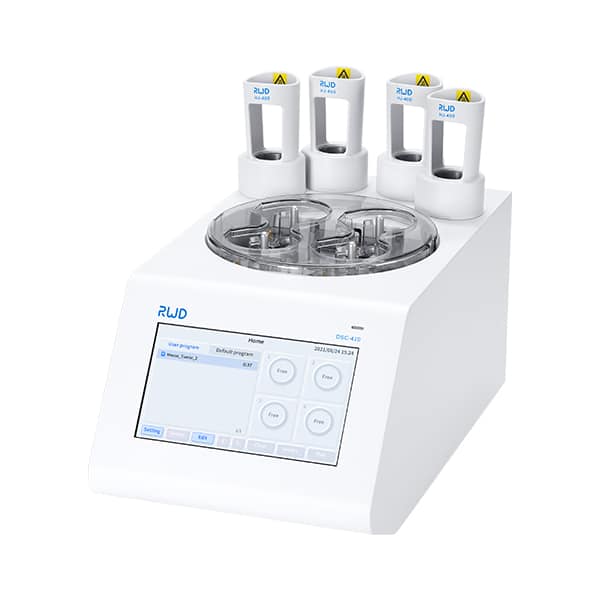
Scenario: you have limited samples, high costs per run, and a tight timeline. Data: 20–40% variability in cell viability between operators; missed rare cell types in half the runs. Question: how do you cut that variance? I’ll walk through the signs that tell us it’s time for a change, and then dive into what really breaks in traditional workflows — plus where smart automation helps. (Yes, that includes hardware, software, and operator training.) Let’s move from the symptom list to the root causes and practical fixes.
Part 2 — Where traditional methods fail (and what it costs you)
automated tissue dissociator should be on your radar if you’re still relying on hand chopping, variable enzymatic steps, or improvised stirring. I’m blunt because I’ve watched teams lose precious samples to over-digestion, clumping, or low viability. Look, it’s simpler than you think: inconsistent mechanical shear and uneven enzymatic digestion are the two biggest culprits. They alter cell-surface markers and drop live-cell yield — which then poisons downstream scRNA-seq data and cell atlas efforts. You pay in wasted reagents, delayed projects, and lost trust from collaborators.
What breaks first?
First, operator variability. One person’s “gentle pipetting” is another’s tissue massacre. Second, time control. Enzymatic digestion needs precise timing and temperature ramps; a minute too long and fragile neurons are gone. Third, throughput mismatch: manual methods don’t scale when you need dozens of samples. I’ve also seen hidden costs like increased doublets from poor dissociation and higher mitochondrial reads in sequencing — both of which reduce usable cell counts. Those are measurable harms, not abstracts.
We tried patch fixes — standardized SOPs, extra training, and more QC checkpoints. They helped a little, but they didn’t remove human error. So we explored automation. Automating the dissociation step reduces operator-to-operator variance, enforces timing and temperature profiles, and gives you run logs for traceability. And yes — there’s a learning curve, but the reproducibility payoff is real. — funny how that works, right?
Part 3 — Principles for the next-generation workflow
Moving forward, I focus on core technology principles: controlled mechanical shear, precise enzymatic delivery, and closed-system processing to cut contamination risks. Modern designs also favor gentle agitation patterns and fine-tuned temperature control to protect cell viability. The goal is simple — preserve biology while extracting cells reliably. When I evaluate a device, I look for consistent single-cell suspension quality, low debris, and reproducible yields across tissue types.
A key element is integration with downstream analytics. For example, if your dissociator hands off a clean, concentrated single-cell suspension, your microfluidics and scRNA-seq steps see fewer failures. The right system reduces the need for post-dissociation filtering and repeated centrifugation, which further protects cell-surface markers. Consider an automated tissue dissociator that logs runs, offers protocol presets, and supports variable tissue programs. Those features speed adoption and make results comparable across operators and sites.
What’s Next
We should judge new solutions by practical metrics, not marketing. I recommend three evaluation points: throughput (samples per day), cell viability and yield across tissue types, and reproducibility (CV across runs). Test devices with your hardest tissue first — if it survives that, it will serve routine samples well. Also factor in service, software updates, and how the system fits your SOPs. — I mean, seriously, those integration bits matter more than glossy brochures.
To wrap up: you don’t have to accept variable dissociation as inevitable. Upgrade when your QC shows consistent losses, when operator time is a bottleneck, or when scale matters. We’ve seen measurable improvements in sequencing success and reduced hands-on time after adopting automated approaches. If you want a concrete starting point, I recommend exploring vendor demos and running side-by-side tests with your own samples. You’ll learn quickly which features matter for your workflow. For reference and tools, check out BPLabLine — they offer systems and support that I’ve found practical in real lab settings.