


Why comparison matters now
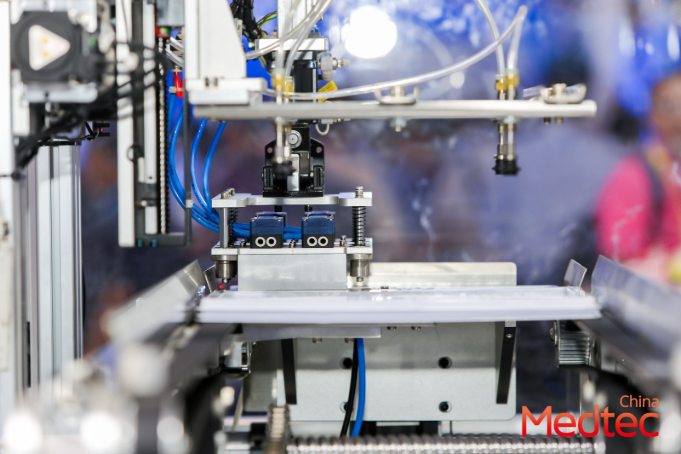
Manufacturers and sterile-pack engineers are choosing trays not by brand alone but by measurable alignment to residual ethylene oxide (EO) PPM limits. At trade shows like Medtec China 2026, you can see competing tray concepts side by side, which helps cut through marketing language. Seeing prototypes on the floor at a China medical exhibition gives practical context — how a tray behaves under a sterilization cycle is not theory, it is physical evidence from booth demos and validation data in Shanghai and other hubs.
Core design factors that change residuals
Three engineering elements control EO residual PPM after sterilization: material chemistry, tray geometry (density), and sterilization dose control. Gamma irradiation affects polymer chains differently than EO. Polymers with high free volume and labile additives trap EO differently, so polymer compatibility is crucial. Manufacturers track sterilization dose and bioburden because those feed into required EO cycles and residual levels. Sterilization terms here: gamma irradiation, EO residuals, PPM, sterilization dose.
Relevant testing standards and sample retention
When vendors claim compliance, ask for protocol references. For radiation sterilization, ISO 11137 is central and its parts are:
– ISO 11137-1: Requirements for development, validation and routine control of a sterilization process for medical devices.
– ISO 11137-2: Establishing the sterilization dose.
– ISO 11137-3: Guidance on dosimetric aspects.
For biocompatibility and residual testing, ISO 10993 is used, and for EO process control ISO 11135 applies. Also, retention sample testing practices should specify incubation periods; for bioburden, a 14-day incubation limit is common for challenge tests and must be stated in protocols. These specifics matter when you compare claims from vendors.
Three tray approaches — a comparative look
Low-density polypropylene (LD-PP): cheap and easy to thermoform. EO residuals often lower after aggressive aeration, but LD-PP can deform under repeated gamma exposure. Reinforced PETG: better dimensional stability with gamma, but PETG’s sorption profile sometimes increases trapped EO—so aeration cycles must be longer. Hybrid composite trays (polymer + thin metal mesh or barrier film): best control of gas diffusion and mechanical strength, yet more complex to validate and higher cost.
Comparison summary:
– LD-PP: low cost, moderate EO control, less gamma resistance.
– PETG reinforced: high stability, variable EO sorption, needs validation focus on residuals.
– Hybrid: best at maintaining EO PPM limits across cycles, needs thorough process validation.
Common mistakes buyers make
Buyers often accept single-cycle data or vendor-provided residual numbers without asking for challenge-test details — insufficient. They fail to verify polymer additive lists, which change EO sorption. Another mistake is ignoring packaging geometry: higher tray density (more parts per tray) can reduce gas exchange during aeration and falsely raise residual PPM. Remember to request full sterilization protocols and desorption curves — not only final PPM numbers. Also check that retained-sample storage and the 14-day bioburden incubation limits are documented in validation reports.
Choosing a tray: practical metrics to compare — dash of experience
From work with suppliers and front-end teams, three practical metrics show real performance: EO residual stability across three consecutive sterilization cycles, mechanical integrity after target gamma dose, and validated aeration time required to reach regulatory PPM thresholds. These metrics reveal whether a tray design holds up in production or only in lab demos — you want numbers that stay steady, not one-off best-case figures. – Small teams especially must prioritize reproducibility over shiny specs.
Three golden rules for selection
1) Measure residual EO PPM after at least three production-like cycles and demand full desorption curves. 2) Verify polymer compatibility with both gamma dose and EO exposure; request additive lists and thermal history. 3) Validate tray density effects: test full-load trays for gas exchange and aeration time, not half-empty mockups. Apply these rules at exhibitions or vendor meetings — they guide practical decisions.
Medtec brings suppliers, engineers, and validation labs together so you can compare designs on data, not on brochures. Final thought: choose what proves steady in process — measurable, repeatable, and documented.
